
Essential Business Tax Preparation Tips for 2026
Our entity type affects what we file and how we report income. Starting early reduces stress and avoids missing documents. Clean bookkeeping and reconciled accounts make tax prep smoother. Good documentation supports what we report. Common issues are messy records, miscategorized expenses, and missing receipts. We can simplify the process by working with a CPA for tax prep and planning. Tax season is easier when we treat it as a process, not a last-minute scramble. For 2026, the basics matter most: keep records organized, review our numbers early, and confirm what filings apply to our business. At REH CPA, we support business owners with bookkeeping, tax planning, business taxation, payroll, bill pay, and CFO services—so our records stay consistent and ready for filing. Business tax preparation generally includes organizing our records, reviewing income and expenses, preparing required filings, and keeping support documents for what we report. Starting early helps us find missing items, fix bookkeeping issues, and avoid rushing—where most mistakes happen. Most businesses have filing obligations depending on their structure and activity. The requirements vary, so it’s important to confirm what applies to us. Most tax-season problems come from incomplete books, missing paperwork, and uncertainty about what needs to be filed. Our entity type affects what returns we file and what information we need to prepare those filings. If we’re unsure, we should clarify early. Confirm entity type and filing needs Gather statements and key documents Reconcile bank/credit card accounts Review income/expense categories for consistency Organize payroll/contractor records (if applicable) Prepare filings and archive support documents Keep income records, expense receipts/invoices, bank/credit card statements, loan statements, payroll records (if applicable), and major purchase documentation easy to access. We want totals that match reality: income that ties to deposits, expenses that are categorized consistently, and no personal spending mixed into business records. Deductions and credits depend on eligibility and documentation. When we’re unsure, it’s better to verify than guess. We stay compliant by filing what’s required, reporting accurately, and keeping documentation that supports our return. The federal return we file depends on our entity type. If we’re not sure, we should confirm before we start organizing records. State requirements vary. We may have additional filings depending on where we operate and what we do. Some structures require coordination between business reporting and owner reporting, which makes clean bookkeeping even more important. These forms are commonly tied to certain entity types, but the right filing depends on our actual structure and any elections. Prior returns help us stay consistent and reference items that may carry forward. Formation documents help confirm how the business is set up. Accurate year-end reporting (like a Profit & Loss and, where applicable, a Balance Sheet) should be supported by transaction-level records. Statements help verify completeness and support reconciliations. If we run payroll, we should keep payroll summaries and year-end reporting support organized. We should keep records for major purchases and improvements so reporting stays consistent. Deadlines vary by entity type and tax year. We should confirm what applies to our business early. State due dates and requirements can differ from federal ones, so we should track our state obligations separately. Extensions may provide more time to file, but planning ahead still matters—especially for anything that can’t be handled last-minute. Some businesses and owners need to plan for payments during the year depending on how income is earned and reported. This is easier when handled proactively. Consistent categorization, regular reviews, and timely posting keep our books usable when tax season arrives. Reconciling bank and credit card accounts helps catch missing, duplicate, or miscategorized transactions. The best results come from consistent use: clean categories, regular reconciliation, and organized documents—regardless of platform. Outsourcing bookkeeping can help if our books are behind, reporting is unreliable, or we want records kept consistently tax-ready. Payroll involves accurate wages, withholdings, filings, and documentation. Organized payroll records support accurate reporting and reduce mismatch issues. Worker classification and year-end reporting should be handled carefully and documented. We should make sure payroll totals and wage expenses tie out to supporting payroll records. A consistent bill pay process helps ensure expenses are captured and supported. Clear vendor records help with expense tracking and year-end reporting. A structured bill pay workflow creates clearer documentation of invoices, approvals, and payments. Cash flow visibility helps us plan for obligations and avoid surprises. Forecasting helps us plan ahead instead of reacting at the end of the year. Basic management reporting helps us understand performance and supports better planning. Better reporting discipline during the year usually makes year-end work faster and cleaner. We maximize legitimate deductions by tracking expenses consistently and keeping documentation. Credits depend on eligibility and facts. We shouldn’t assume—verify. Invoices, receipts, and proof of payment matter. Organized records reduce headaches later. Most missed opportunities happen because records are incomplete. A better system prevents that. This usually happens when receipts are missing or expenses are miscategorized. Unreconciled accounts, duplicates, and mixed personal/business spending are common causes. Misclassification can create compliance problems. We should clarify early. Start early, reconcile accounts, review totals, and avoid rushing. Different structures have different reporting needs, so our records should match our structure. Multi-owner businesses typically need more coordination and cleaner documentation. Good records reduce stress, support reporting, and help us stay consistent. State rules may differ. We should track what applies to us and where we operate. Planning works best throughout the year, supported by accurate books. Depending on our structure, proactive planning for payments can help us avoid surprises. We provide year-round tax planning and business taxation support to help clients stay organized, proactive, and prepared. Clean records and regular review make changes easier to handle. Choose tools that support clean reporting and document organization. Cloud tools help with consistency, collaboration, and access to records. Integrations can reduce errors and simplify reporting. Receipt capture and organized folders prevent last-minute scrambling. Our books are behind or unreliable We’re unsure about entity filing requirements Payroll/contractor reporting is complicated We received a notice or have a complex year We bring bookkeeping, tax planning, and business tax preparation together so records stay consistent and filing is less stressful. When our situation changes or gets complex, individualized guidance can help us stay organized and compliant. For 2026, the best tax prep strategy is consistent: keep your books current, keep documentation organized, and confirm filing requirements early. If you want help keeping your records tax-ready and coordinating bookkeeping and tax work, reach out to us at REH CPA and we can support that process. It depends on complexity, how clean our records are, and how confident we are about filing requirements. Income records, expense documentation, statements, payroll/contractor records (if applicable), major purchase records, and prior-year returns. LLCs can be taxed different ways depending on structure and elections, while corporations generally have more defined entity-level filing requirements.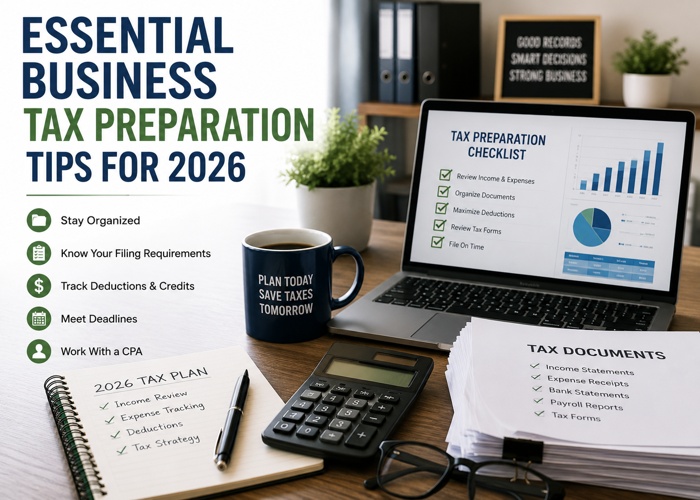
Essential Business Tax Preparation Tips for 2026
Key Highlights
Overview
Understanding Business Tax Preparation for 2026
Defining business tax preparation
Why preparing taxes early matters
Who needs to prepare business taxes
Problem statement for business owners
Identifying our entity type (LLC, S-corp, partnership, corporation)
Key Business Tax Preparation Steps
Step-by-step tax preparation checklist
Organizing essential documents
Reviewing income and expenses
Calculating deductions and credits
Ensuring compliance with IRS standards
Determining Necessary Business Tax Forms
Federal forms for business tax filers
State-specific business tax obligations
S-corp, LLC, and partnership filing requirements
Form 1120, Form 1120-S, Form 1065 overview
Must-Have Documents Before We Start
Prior year’s tax returns
Articles of incorporation or formation
Financial statements and bookkeeping records
Bank and credit card statements
Payroll reports and filings
Asset purchase and depreciation information
Common Business Tax Filing Deadlines in 2026
Federal tax deadlines for businesses
State business tax deadline overview
Extensions and late filing consequences
Estimated tax payment schedules
Organizing Our Bookkeeping for Tax Preparation
Monthly bookkeeping best practices
Reconciling accounts for accuracy
Using QuickBooks or other software efficiently
Outsourced bookkeeping benefits
Payroll Services and Their Tax Impact
Payroll processing essentials
Payroll tax filings and compliance
W-2 and 1099 preparation guidance
Aligning payroll records with tax filings
Bill Pay and Accounts Payable Support
Tracking accounts payable for deductions
Managing vendor payments accurately
Bill pay solutions and audit trails
Utilizing Outsourced/Fractional CFO Services
Cash flow management tips
Budgeting and forecasting for tax season
KPI reporting and management reporting benefits
How a fractional CFO streamlines tax prep
Maximizing Deductions and Credits
Identifying legal business deductions
Common credits available to businesses
Documentation required for deductions
Avoiding missed opportunities
Mistakes to Avoid When Preparing Business Taxes
Overlooking eligible deductions
Misreporting income and expenses
Incorrectly classifying employees and contractors
Filing errors and how to prevent them
Compliance Tips for S-corps, LLCs, Partnerships
Entity-specific compliance considerations
Navigating multi-owner business tax issues
Maintaining proper documentation
State and federal compliance differences
Tax Planning Strategies for 2026
Year-round planning for lower tax bills
Estimated tax guidance
Leveraging REH CPA tax planning services
Adapting to new IRS rules
Using Technology for Efficient Tax Preparation
Selecting the best tax software
Cloud-based bookkeeping tools
Integrating payroll solutions
Automating document management
When to Talk With a CPA
Signs we need professional tax help
How REH CPA simplifies tax preparation
Getting personalized advice for our business
Wrapping Up
Frequently Asked Questions
Is it better to hire a CPA or do business taxes myself?
What documents do I need before starting tax prep?
What’s the difference between preparing taxes for LLCs vs corporations?